Twenty Minutes of Truth: Small-Room Soundcheck Rituals for a Guitar-Led Night
Photo: Ministry of Information Photo Division Photographer, Public domain, via Wikimedia Commons
The room is empty except for a discarded setlist and a radiator that ticks like a metronome. The PA is on. A guitarist is crouched by an amp, chasing a hum that may be a cable, a pedal, or the building itself. This is the soundcheck in a UK grassroots venue: not a technical formality but the first honest conversation between a band and a room. In 2026, with backline tighter and stages smaller, those twenty minutes carry more weight than ever.
'You can hear a band's manners in the first five minutes of a check,' says Nina, a sound engineer who works across small rooms in Leeds and Manchester. 'If they listen, the gig will usually be fine. If they shout 'more me' before anyone has heard a note, it's going to be a long night.'
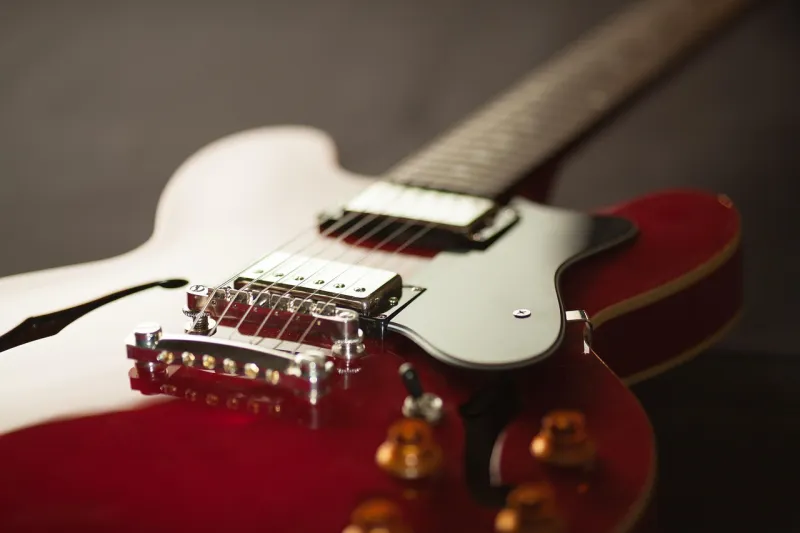
That is the thing about small rooms. They do not flatter. A big stage can swallow a shoddy check; a 150-capacity room above a pub will repeat every mistake back at you, kindly but firmly. The soundcheck is where the guitar-led night is either built or apologised for. These seven rituals will not guarantee a great gig, but they will give it a fighting chance.
1. Arrive before the room does
The best checks begin before the doors open and before the room fills with its own audience-noise. An empty venue has a sound: the low hum of fridges, the bounce off a low ceiling, the way a snare cracks when there is no one to absorb it. Walk in, listen, then load in. 'The room tells you what it wants if you get there early enough to hear it,' says Tom, guitarist with a Sheffield three-piece. 'If you arrive late and rushed, you're just fighting the building.'
2. Say what you need in human language
'More guitar in the monitor' is useful. 'Can you make it sound better' is not. Small-room engineers are often doing three jobs at once, and they respond to clarity, not vibes. Nina suggests a simple formula: say what you hear, where you hear it, and what you want. 'I can't hear my voice over the cymbals' is a problem. 'Can I have a bit more vocal and a bit less cymbal in this wedge' is a solution. The same goes for guitarists: ask for the amp to be pointed at your head, not your knees, before you ask for more volume.
3. Find the hum before it finds you
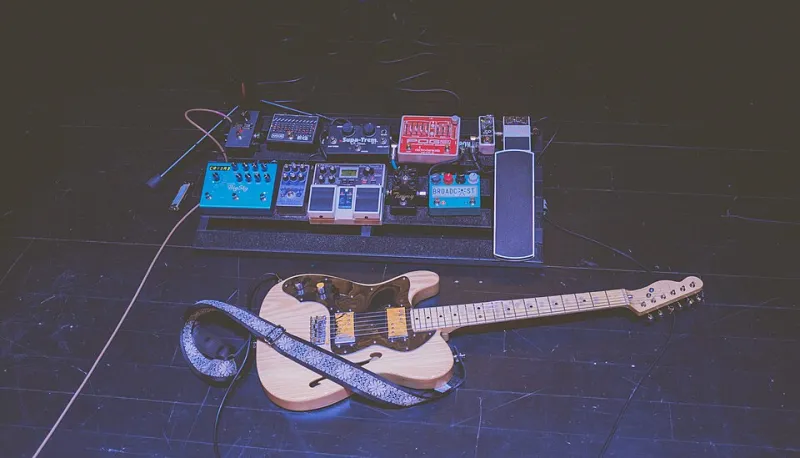
Every small room has a hum. Sometimes it is the lighting rig; sometimes it is a pedalboard power supply; sometimes it is the ancient socket behind the stage that has seen more bands than the venue's licence allows. Chase it now, not during the quiet song. Bring a spare cable, a spare power supply and a little patience. A guitarist who solves their own hum is a guitarist the engineer will remember fondly. A guitarist who ignores it is a guitarist the audience will remember less fondly.
4. Tune the amp to the room, not just the tuner
The tuner gets you to pitch; the room gets you to tone. In a boomy back room, that means less bass on the amp and more space in the mids. In a bright, glassy room, it might mean turning the treble down before the soundcheck turns it down for you. 'Small rooms are all about subtraction,' says Nina. 'You don't add clarity. You take away the things that are fighting.' Use the check to find one good guitar sound, not five. The night will thank you.
5. Make peace with the radiator
The drummer is always negotiating with something: a radiator, a pillar, a low beam, a wall that insists on its own snare sound. This is the unglamorous diplomacy of the grassroots gig. Move the kit if you can; dampen the cymbal if you must; accept that the room will not be rebuilt for your ride. 'I've seen drummers spend fifteen minutes arguing with a radiator,' says Tom. 'The radiator always wins.' Better to find a workable compromise and save the energy for the set.
6. Check the quiet parts, not only the loud ones
Most soundchecks become a loudness contest. Everyone plays their biggest riff, the engineer sets the faders, and then the band plays a quiet verse that disappears. Check the dynamic range. Play the soft section at performance volume. Let the engineer hear the gap between the guitar and the voice, the space around the snare, the moment when the band drops down. That is where the drama lives. A check that only rehearses the loud parts is only half a check.
7. Tape the stage, then trust the night
Mark the mic positions. Mark the amp. Mark the spot where the singer stands when they stop hiding behind the monitor. Then stop checking. The temptation in a small room is to keep tweaking until the doors open, but the audience changes the acoustics the moment they arrive. Tape what matters, take a photo of the desk if you need to, and let the gig become the gig. The soundcheck is not the performance, but it is the rehearsal for the performance's trust.
By the time the first band takes the stage, the room has already heard something. It has heard whether the guitarist listened, whether the drummer compromised, whether the singer asked for help or demanded it. That is why the soundcheck is the song before the song. In 2026, in rooms where the backline is borrowed and the margins are thin, those twenty minutes of truth are not a luxury. They are the groundwork.