The Backline Commons: Borrowed Amps, Shared Fuses and the Trust That Keeps 2026 Gigs On
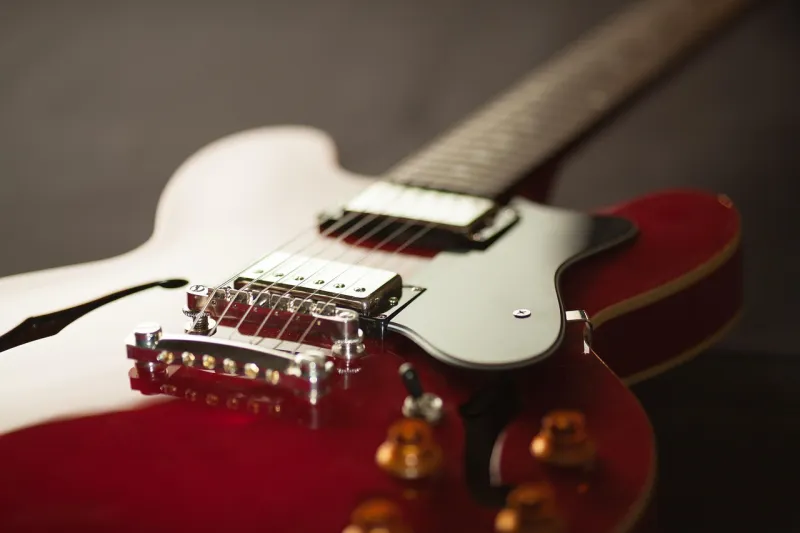
Photo: guitar amplifier backline shared gear UK music venue cables fuse, via cdn.pixabay.com
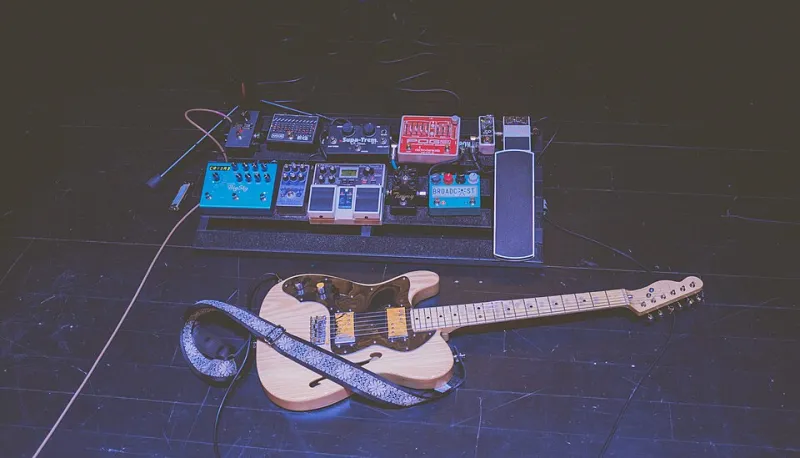
A gig in 2026 can hinge on a borrowed AC30 and a fuse. Not a metaphorical fuse: the small, glass-and-metal kind that blows in a venue with questionable wiring and takes the whole backline with it. The guitarist looks at the amp, the amp looks back, and someone says, 'Has anyone got a spare?' That question, and the answer that usually follows, is the quiet economy of the UK underground. It is not written down anywhere. It runs on trust.
The amp that isn't yours
Backline is scarcer than it used to be. Rehearsal rooms have closed; van hire has crept up; the second-hand market has become a contact sport. For a young band playing a support slot in a city they do not live in, the difference between playing and not playing is often a borrowed cab, a shared combo and a promoter who knows someone who knows someone. 'I can't remember the last time I played a show where every band brought their own full rig,' says Cal, guitarist in a Cardiff three-piece. 'You turn up, you see what's there, and you make it work. That's just the deal now.'
The deal is not unique to 2026, but it has become more visible. When money is tight and backline is thin, the scene does what scenes do: it improvises. Amps go in the back of cars with people who are not their owners. Cabs are lent across town with a handshake and a text message. House kits are treated as common property, which is to say they are treated with a mixture of gratitude and barely concealed anxiety.
Etiquette is the real patch cable
Gear-lending has a code, and the code is mostly unspoken. Ask before you touch. Do not put a drink on a borrowed amp. Do not turn it up past the point where the owner would turn it up. Return it with the cables coiled, the valves warm but not cooked, and the grille cloth free of someone else's beer. If something breaks, say so immediately. If you can fix it, fix it. If you cannot, offer to pay. 'The fastest way to stop being lent gear is to pretend nothing happened,' says Ruth, who runs a monthly guitar night in Leeds. 'The scene is small. Word travels faster than a bad review.'
There is also a positive etiquette: offer before you are asked. Bring a spare cable. Bring a power supply. Bring a fuse. The guitarist who arrives with a small bag of useful things is the guitarist everyone wants on the bill. 'It's not about being the best player,' says Cal. 'It's about being the person who makes the night easier.'
Shared fuses, shared risk
The literal fuse is a good metaphor because it captures the risk. Borrowed gear is not free of consequence. Speakers blow. Valves fail. A borrowed amp can develop a hum that was not there before, and nobody can prove whether it was the venue's power or the pedalboard. Insurance is rare; written agreements are rarer. Most of the time, the risk is absorbed by goodwill. Sometimes it is absorbed by an awkward silence.
'You have to decide what kind of scene you want,' says Ruth. 'If you treat every borrowed amp as a potential lawsuit, nobody lends anything. If you treat every borrowed amp as disposable, nobody lends anything either. The middle ground is respect.' That middle ground is not glamorous. It is a text message that says, 'The input jack is crackling, I'm sorry, I've left it with the sound engineer.' It is a twenty-pound note towards a replacement valve. It is a promoter who keeps a house amp in working order rather than letting it become a stage prop.
House kits and the venue as lender
Some venues have become de facto backline libraries. A house kit, a house bass amp, a house guitar amp: these are the quiet infrastructure of the grassroots circuit. They are also a burden. House gear gets played by everyone, maintained by nobody and blamed for everything. A promoter who keeps a house kit running is performing an act of community service, whether or not the audience notices.
'We have a house amp that has been on every bill for five years,' says Ruth. 'It smells of old beer and it has a broken reverb, but it works. If it dies, we have a problem, because half the bands who play here rely on it.' That reliance is practical, but it is also emotional. The house amp is a small promise: you can turn up without everything and still be heard.
What the favour economy reveals
The borrowed-amp economy is not a flaw in the UK underground. It is a feature of it. It reveals a scene that is still willing to share, still willing to take a chance on a stranger with a gig bag, still willing to believe that the person borrowing the amp will treat it as if it were their own. That is not naive. It is a form of solidarity that has been tested by rising costs and thinner margins, and it has held.
But it also reveals fragility. A scene that runs on favours is a scene that can run out of favours. If the same five people lend the same five amps to the same five bands, the generosity becomes a bottleneck. The future of the grassroots circuit may depend on more than goodwill: on better house backline, on shared gear libraries, on promoters and musicians treating lending as part of the infrastructure rather than an emergency measure.
For now, the answer is still the same. Someone asks, 'Has anyone got a spare?' Someone else says yes. The fuse gets replaced, the amp gets plugged in, and the night goes on. In 2026, that small act of trust is not just how the underground survives. It is how it sounds.