The Velcro Fingerprint: Reading a Second-Hand Pedal Board Like a Scene Archive
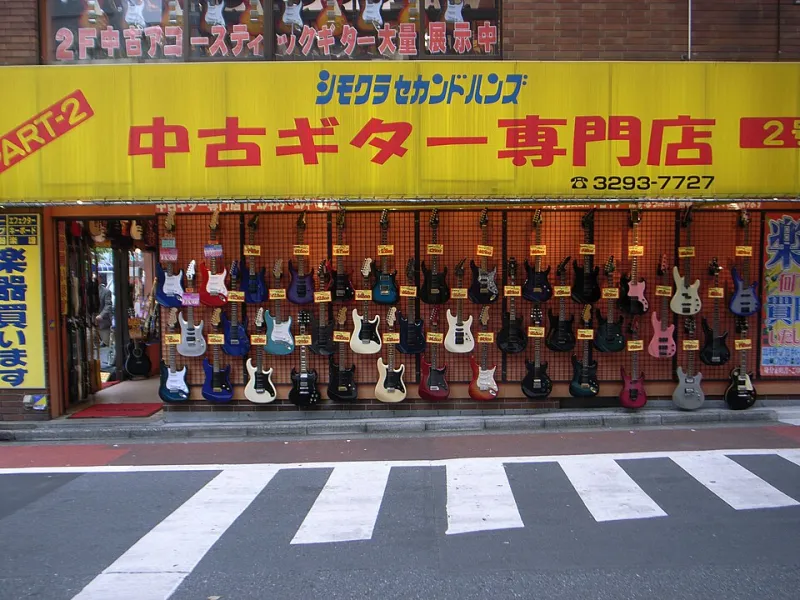
Photo: perke, CC BY 2.0, via Wikimedia Commons
The label under the tape
The first thing you notice is not the pedal. It is the tape. A strip of gaffer, gone furry at the edges, with a phone number in biro and a name that might be 'Daz' or 'Dec'. Underneath, a Boss TU-2 tuner with a cracked plastic corner and a battery cover held on by hope. You found it on Facebook Marketplace for thirty quid, met a man in a supermarket car park in Sheffield, and now it sits at the front of your board. It works perfectly. It has done for years. It will probably outlast you.
That is the quiet bargain of the UK's second-hand pedal economy. Not just that used gear is cheaper — though it is — but that it arrives with a history you can read. A scuff is a gig. A sticker is a venue. A smear of Velcro fuzz is a board that was built, rebuilt and gigged in rooms with low ceilings and sticky floors. Buying second-hand is a practical act, yes. It is also a small act of scene solidarity, whether the seller knows it or not.
A paper trail in marker pen
New pedals arrive in boxes with manuals and a warranty card. Second-hand pedals arrive with forensic detail. There is the initials scratched into the baseplate. The strip of masking tape with a setlist scribbled on it — 'encore: slow one' — still stuck to the back of a delay. The venue sticker from a pub that closed in 2019, or a festival that ran for three years and then stopped. None of this is official provenance. It is better: it is wear.
You can learn a lot from a pedal's scuffs. A bright scuff on the top corner means it lived on a floor, not a board. A ring of worn paint around a footswitch means someone stomped it with feeling, night after night. Velcro on the back means it was part of a system; no Velcro means it was a loner, borrowed, or sold before the owner committed. A sticker from a long-gone venue is a tiny archive of a grassroots circuit that rarely gets written down. The pedal is not just a tool. It is a passport.
The economics of loud
The maths is simple. A new Boss DS-1 is still one of the cheapest ways into a usable distortion, but thirty or forty quid for a second-hand one is cheaper. A used ProCo Rat, a beaten Big Muff, a Turbo Tuner with a faded display — these are the sounds of a thousand UK practice rooms, and most of them changed hands long before they reached the stage. In 2026, with the cost of everything from strings to van hire doing what it is doing, the second-hand market is not a niche. It is the main road.
The market itself is informal. Facebook Marketplace and Gumtree do the heavy lifting. Local guitar shops run noticeboards. Rehearsal rooms have a de facto lending library: a box of pedals by the kettle, each with a name on the bottom, each available if you ask. Cash still moves in car parks and behind venues. None of this appears in the official story of the music industry. All of it keeps bands playing.
Solidarity, not speculation
There is a difference between buying used and flipping. The flipper scans for bargains and lists them at a mark-up. The scene buyer does something else: they buy from another musician, pay a fair price, and often pass the pedal on when they upgrade. A chain of Boss tuners, each with a different owner's initials, is a small economy of trust. You are not just buying a pedal. You are keeping a piece of gear in circulation, and keeping money inside a network of people who are all trying to do the same thing — make a decent noise in a small room.
This is where the second-hand board becomes a form of solidarity. When you buy a used pedal from a band who are packing it in, you are not rescuing them. But you are acknowledging that the gear has a life beyond one owner. When you lend a fuzz to a support act because theirs died at soundcheck, you are doing the same thing. The pedal economy is not a market; it is a circulatory system.
The practical case for a battered board
There is also the boring, sensible argument. Older Boss pedals are repairable, plentiful, and built like breezeblocks. A scuffed DS-1 is less likely to let you down than a new boutique pedal with a surface-mount circuit and a two-week lead time. Spare parts exist. Any decent tech has seen one before. If it dies on a Tuesday, you can borrow another one on Wednesday. That reliability matters when you are playing a pub with a 9pm curfew and a PA that hums in E flat.
A second-hand board is also a modular one. You can swap a pedal without losing a fortune. You can try a sound for a month and move it on if it doesn't fit. That is how most guitarists actually learn: by living with a pedal, not by watching a demo. The scuffs are part of the lesson. The sticky label is a reminder that someone else already tried this and found it useful enough to keep.
The next hand-off
So the next time you see a pedal with a cracked corner and a name in marker pen, don't think of it as damaged. Think of it as documented. The tape, the sticker, the initials — they are the paper trail of a scene that mostly runs on cash, favours and word of mouth. You are buying a small piece of that. You are also joining it.
Keep the label. Add your own. Pass it on.