Stapled, Not Streamed: The Photocopied Fanzine Is Back on the Merch Table
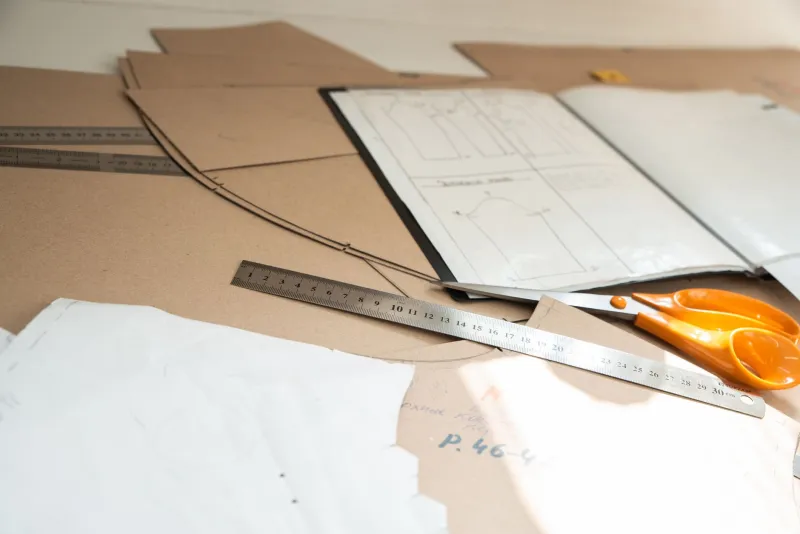
There is a particular sound that now sits alongside the pre-gig chatter in small UK rooms: the click-clack of a stapler. Not a drum machine, not a pedalboard switch, but a band member at the merch table, assembling twenty-odd copies of a fanzine that has been photocopied somewhere between soundcheck and doors.
It is a modest sight. A5 sheets, sometimes folded badly, sometimes with a cover drawn by the bass player's flatmate. But in 2026, the fanzine is quietly returning to the guitar-led underground, not as a nostalgia exercise, but as a practical response to a very modern problem: how do you say something real to people when every platform is shouting?
The table with the stapler
Walk into a grassroots show in Leeds, Glasgow, Bristol or Cardiff this autumn and you may find a small pile of paper next to the cassette tapes and the slightly faded tour T-shirts. It might be called something like Static, Riff Raff or The 23:40. It might contain a tour diary, a half-finished interview, a comic about a broken valve amp, or a list of the best chip shops near the venue.
The point is not polish. The point is proximity. A fanzine is made by the same people who are about to plug in and play, and it reaches the audience before the first chord. It is not an advert for the band so much as a window into the world around the band: the shared houses, the borrowed vans, the rehearsals that get cancelled because someone has a shift.
That is why it fits the current mood. Algorithmic feeds reward consistency and speed. A photocopied fanzine rewards care and time. It can be late. It can be wonky. It can include a correction written in biro on the inside cover. In a scene that often feels as if it is being asked to produce content, the fanzine is a reminder that a scene is also a conversation.
Why paper, why now
There is nothing new about DIY print in UK music. The punk and post-punk fanzines of the 1970s and 1980s proved that a photocopier and a strong opinion could travel further than a major label budget. What feels different in 2026 is the motivation. This is less about rejecting digital tools and more about choosing a different pace.
A band can post a clip of a new song and reach thousands of people in an afternoon. That is useful. But a clip is gone almost as soon as it arrives. A fanzine sits on a shelf. It gets read on the bus home. It gets passed to a friend. It might even end up in a venue's toilet cubicle, which is arguably the highest honour in underground publishing.
The format also suits guitar bands that have more to say than a caption allows. Lyrics need context. A song about a dying town or a difficult year does not always fit into fifteen seconds. A fanzine gives those ideas room to breathe, without the pressure of a press release or a label bio. It can be funny, petty, sincere or all three at once.
And it is cheap. That matters in 2026. Printing a short run at a local copy shop, or through a small riso outfit, is still within reach for a band that is already watching fuel costs and venue hire. A fanzine does not need a marketing budget. It needs an afternoon, a stapler and a willingness to be a bit honest.
What actually goes in them
The best fanzines tend to avoid the obvious. A band biography is fine, but it is not the reason anyone picks one up. The reason is usually curiosity: what is this person like when they are not on stage?
So you get tour diaries that mention the bad load-in rather than the sold-out room. You get interviews with the support act, the sound engineer or the person who runs the local record shop. You get pedalboard confessions, hand-drawn maps of the cheapest parking near the venue, and essays about why a certain riff still works after twenty years. You get scene gossip that is affectionate rather than cruel.
One Sheffield three-piece recently included a page titled Things We Have Broken This Year, which listed a snare stand, a van door and a promise to a promoter. It was funnier and more memorable than any press shot. That is the fanzine's real advantage: it can be human in a way that a social media grid often is not.
The economics of a photocopy
None of this is to pretend that paper is free. A short run of fifty copies can cost a few pounds or a few dozen, depending on how ambitious the cover is. Bands often sell them for two or three pounds, or give them away with a T-shirt. Some split the cost with another act on the bill. Others treat it as merchandise that pays for itself and nothing more.
The distribution is just as DIY. They are handed out at gigs, posted to people who order records, left in record shops and passed around at all-dayers. Some bands put a PDF online as well, which is sensible. The paper version is not about exclusivity. It is about texture. It is about the difference between scrolling past something and holding it.
That distinction matters more than it might seem. In a scene built on small rooms and limited budgets, the fanzine is a way of making the night last longer. It gives the audience something to take home that is not another notification. It also gives the band a reason to think beyond the next single, to ask what they actually want to say and to whom.
A slower kind of scene
There is a risk, of course, that the fanzine becomes just another item on the content treadmill. A band can feel obliged to produce one for every release, and the result can be as hollow as a bad Instagram caption. The good ones avoid that by staying small and specific. They are not trying to document the whole scene. They are trying to document their corner of it.
That is why the current revival feels genuine. It is happening in the same venues where people still put up flyers with tear-off tabs, where promoters print physical tickets, and where the support band's singer is also the person handing out the fanzine. It is not a trend being pushed from above. It is a habit being rebuilt from below.
In 2026, the UK guitar underground has plenty of ways to be heard. The photocopied fanzine is one of the quieter ones. It does not need an algorithm. It just needs a stapler, a decent idea and someone willing to stand by the merch table and say, here, have a read.