Platform Zero: Why the 23:12 Is Writing Your Setlist
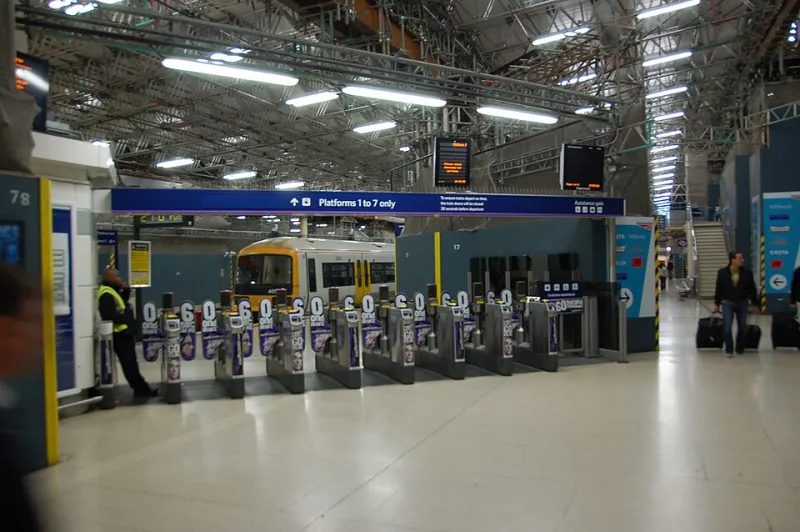
Photo: Ralf Roletschek (talk) - Fahrradtechnik auf fahrradmonteur.de, FAL, via Wikimedia Commons
There is a moment, somewhere between the second encore and the last round, when a grassroots gig stops being about music and becomes a maths problem. The room is warm. The amps are still ticking. The guitarist is deciding whether to play one more. Then someone checks their phone and says the words that have quietly reshaped the UK underground in 2026: 'I have got the last train.'
That sentence is not a complaint. It is a schedule. And across Leeds, Manchester, Bristol, Glasgow, Norwich and a hundred smaller towns, it is doing more to shape set times than any promoter, licence or sound curfew.
The 23:12 Rule
Ask a promoter who books midweek shows and they will tell you the same thing: the room fills late and empties early. People finish work, eat something, get the bus, and arrive in time for the second support band. Then, around 22:40, a different kind of movement begins. Not a rush for the bar. A rush for the station.
'You can feel the audience doing timetable arithmetic,' says one Sheffield promoter who has been booking pub and community-room shows for more than a decade. 'They are not leaving because they are bored. They are leaving because the 23:12 to Doncaster is the last one and the replacement bus is not a reasonable substitute.'
So the set times move. Support slots shrink to twenty or twenty-five minutes. Headliners go on at 21:15. The encore becomes a negotiation between the singer and the room, with the singer usually losing. A band might play four songs instead of five. A slow-burning opener gets cut because it takes three minutes to land and the audience is already checking the clock.
The Curfew Nobody Printed
Venue licences are printed. Rail replacement is not. A Sunday show in a city where engineering works have closed the line is a different animal from a Friday night in the same room. The venue might have a midnight licence, but the timetable has a 22:50.
This is not just a big-city problem. In towns with one station and two platforms, the last departure can be before 22:30. That changes who can play, who can watch and who can sell merch afterwards. A band from the next town over might turn down a support slot because the only train back leaves before their set ends. A fan might skip the headline act because the bus replacement adds forty minutes to a journey that normally takes twelve.
Some venues are adapting by geography. Rooms within a short walk of a station can still run midweek shows with a 22:45 finish. Rooms on the edge of town, or at the end of an industrial estate, increasingly rely on local audiences who can walk or get a lift. The midweek gig has not disappeared. It has become a hyper-local event.
Support Slots Get Shorter, Not Sweeter
Twenty-five minutes is enough for four songs and a thank-you. It is not enough for the slow burn. Bands are learning to front-load their sets: strongest song first, second strongest second, no long intro, no tuning between every number. The support slot is becoming a trailer rather than a short film.
That is a loss for anyone who loves the slow reveal of a guitar band finding its feet on stage. But it is also a practical response to a real constraint. If the audience is arriving late and leaving early, the band has to make its case in the middle. The middle is now the whole night.
What Promoters Are Doing
Promoters are becoming timetable readers. Some now print the last train time on the flyer next to the door time. Others publish stage times in advance so fans can plan. A few are experimenting with earlier shows: doors at 18:30, first band at 19:00, last band off by 21:45. The room is fuller earlier, the bar takes money earlier, and everyone gets home.
There is also a quieter change: promoters are telling bands the real curfew, not the licence curfew. The licence says midnight; the room says 23:00; the railway says 22:50. Bookers who pretend otherwise end up with a stranded guitarist and a bad review.
The Trade-Off
None of this is neutral. A shorter set is a smaller canvas. An earlier headline slot can mean a fuller room, but it can also mean fewer people have finished dinner. A 22:45 finish is better for the train, worse for the atmosphere. The underground runs on compromise, and the timetable is now part of the compromise.
But there is an honest logic to it. A packed room at 21:30 is often better than a half-empty one at 23:00. A band that plays four tight songs to a listening crowd may leave a stronger impression than one that plays six to a room of people checking their phones for platform updates. The last train is not the enemy. It is an awkward collaborator.
In 2026, the underground is learning to play its tempo: shorter, earlier, more deliberate. The encore may be shorter. The conversation afterwards can be longer. And if the 23:12 is the headliner, at least it is honest about its set time.