Mixed Memories: What a Sound Engineer Takes Home From a Grassroots Guitar Night

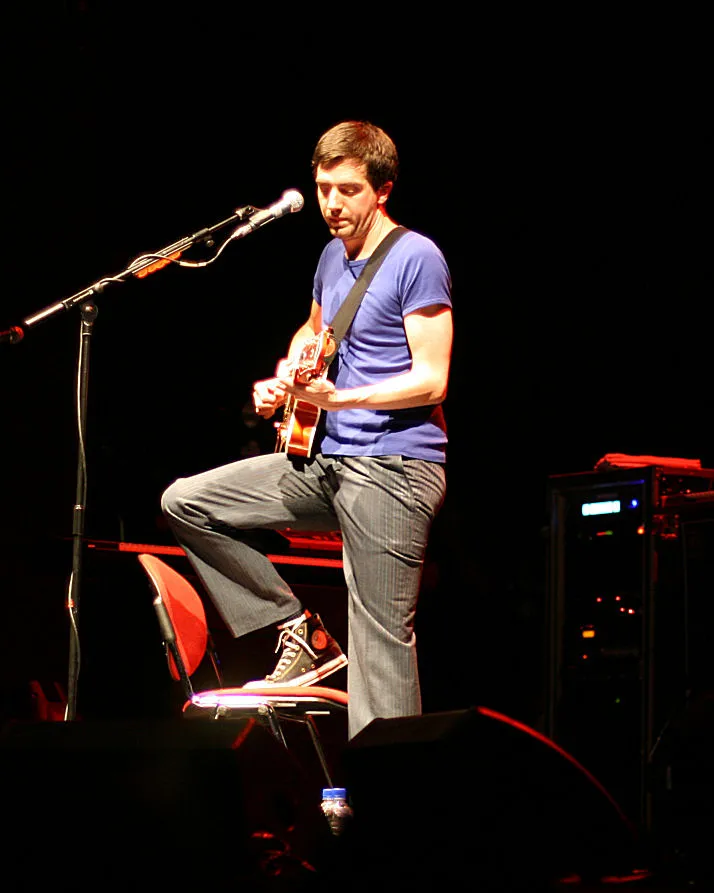
Photo: Free To Use Sounds, CC BY-SA 4.0, via Wikimedia Commons
The person behind the mixing desk at a grassroots guitar gig has a strange job. They are expected to be invisible, to make a band sound like itself, and to do it in a room that was designed for something else entirely — a pub quiz, a wedding, a Thursday night with the football on. They hear the band in a way the audience does not. They hear the room too.
Ask an engineer what they remember about a small guitar night and you rarely get a story about a specific pedal. You get one about stage volume, amp placement, or the way a band spoke to each other between songs. The desk remembers behaviour. That is worth paying attention to.
The Desk Hears the Room First
In a 100-cap room, the sound is mostly the room. The desk can add clarity, a little warmth, a bit of vocal lift, but it cannot remove the fact that the guitar amp is pointed at the back wall or that the bass is standing in the corner where every low frequency goes to argue with itself. Engineers do not expect a perfect room. They expect a band to work with the one they have been given.
Dan, who has mixed a 120-cap room in Sheffield for the better part of a decade, put it plainly: 'I can tell in the first thirty seconds whether the band has thought about the room. If the guitar amp is on a chair and aimed at the vocal mic, I know what my night is going to be.' That is not a complaint about gear. It is a complaint about attention.
Stage Volume Is a Decision, Not a Default
There is a myth in grassroots guitar music that loud is a fixed setting. It is not. Loud is a relationship between the amp, the drummer, the vocalist and the room. In a small UK venue, the guitar amp often sets the ceiling for everything else. If the amp is too loud, the vocalist asks for more monitor, the monitor feeds back, the desk pulls the vocal down, and the audience hears a guitar band with a singer somewhere behind the cymbals.
The engineers I spoke to were less interested in how loud a band was than in whether the volume was a decision. A band that says 'this song is quieter, we will turn down for it' is easier to mix than a band that treats the volume knob as a personality. The same goes for the drummer. A heavy-handed drummer in a small room is not a problem to be solved by the desk. It is a problem to be solved by the arrangement — lighter verse, more space, a chorus that actually arrives.
Where the Amp Points Is Part of the Arrangement
Amp placement is the most underrated guitar skill in grassroots venues. Point it at your legs and the front row gets the beam. Point it at the back wall and the room gets a wash. Point it across the stage and the band hears itself without the audience being punished. If there is a house cab or a folding chair, use it. If the desk has a mic on the amp, trust it. The engineer does not need the amp to be loud to make it sound big.
Priya, who runs the desk at a community arts centre in Norwich, said the best guitar bands she mixes are the ones who treat the amp as one voice in a conversation. 'They do not need to fill every gap. They leave the vocal a hole. That is a gift to the desk.'
Vocals Are Not Competing With You
At grassroots level, the vocal is usually the thing the audience has come to hear, even when the band is guitar-led. That does not mean the guitar has to be quiet. It means the guitar has to be placed. A riff that sits in the same frequency range as the vocal will fight it. A riff that sits above or below it will not.
This is why the between-song habits matter. A band that turns down the guitar before the quiet song, or steps back from the mic during the heavy one, is giving the desk a chance to keep the vocal present. A band that leaves everything at eleven and then asks for more vocal is asking the engineer to fix an arrangement problem with a fader. Sometimes it works. Rarely does it sound like the band.
What Engineers Actually Remember
Ask what they remember and the answers are oddly specific. The band who said thank you to the bar staff. The guitarist who re-tuned silently with a pedal tuner instead of broadcasting it. The singer who introduced the band without a long story. The band who finished early and left the stage tidy. The band who played one song too long and made the next band's changeover a panic.
These are not technical memories. They are social ones. The desk is the one place in the room that sees the whole night — the load-in, the soundcheck, the set, the strike. Engineers remember the bands who made the night easier, and they remember the ones who made it harder. In a grassroots scene, that memory is a form of reputation.
So the next time you play a small UK room, do not just ask the desk for more guitar in the monitor. Ask what the room sounds like from where they are standing. Ask where the amp should point. Ask what they need from you. The answer will tell you more about playing for the room than any pedalboard ever will.