The Song That Never Leaves the Room

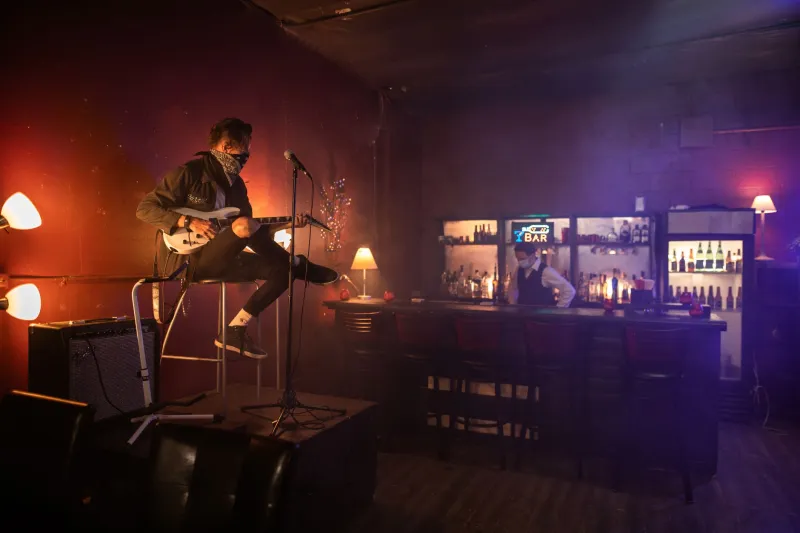
There is a song I have only ever heard live. It belongs to a Leeds four-piece who play the back room of a pub near the canal, and it has no chorus to speak of, just a clipped guitar figure that repeats while the singer says less and less. Everyone who has seen it knows the moment when the drummer stops keeping time and starts keeping tension. Nobody has a decent recording of it. The band have never put it on a release. After a show this autumn, I asked why. The guitarist shrugged and said, 'It doesn't work anywhere else.'
That answer has stayed with me. In a scene where every support slot is filmed on a phone and every half-finished idea ends up on a demo, choosing not to record a song is a deliberate act. It is also a practical one.
A Song With an Address
Some songs have a postcode. The Leeds tune relies on a low ceiling and a PA that behaves like a fourth member of the band. Play it in a cleaner room with a higher stage and the guitar part stops bouncing; the gaps get too wide. The same is true of a Bristol trio I saw at a small upstairs venue in 2026, whose best number depends on the singer standing away from the mic and letting the room do the work. On a phone recording it sounds like a mistake. In the room it sounds like a decision.
Grassroots venues are not neutral containers. The Brudenell, the Louisiana, the Glad Café, the Lescar, Clwb Ifor Bach: each one has its own reverb, its own sightlines, its own bar-time acoustics. A song written for one of those rooms can lose its shape when it is moved. Bands know this. They also know that a recording becomes the version everyone hears first, even if it is the worst version.
The Phone Is Not a Time Machine
Small-room recordings are documents of atmosphere, not necessarily of songs. You get the chatter, the clink of glasses, the bass turning to mush, the person near the front shouting the name of a song the band have already played. You also get a flattened picture of something that felt enormous. That gap between memory and file is where the trouble starts.
A band can spend months making a release that sounds exactly right, then watch a scrappy phone clip of a live-only song travel further than the single. The clip is not the song, but it becomes the evidence. For a guitarist who has spent time on tone and arrangement, that is a strange kind of defeat. You cannot argue with a video that has already been shared.
The Release Is a Different Room
The practical question is not whether a song is good. It is whether the release is the right room for it. A studio or a decent live session removes the accidents that made the song work. Sometimes that is fine: the song grows up, finds a new shape, earns its place on the record. Other times it becomes polite. The danger is not recording a live favourite; it is recording a version that nobody recognises.
A Glasgow band I spoke to keep a seven-minute instrumental jam off their releases because it only works when the audience is close enough to hear the amps humming. A Cardiff songwriter has a song that requires a guest fiddle player who is not always available. They could record it with someone else, but they do not want to. The song is tied to a person and a night. Putting it on a record would make it into a different song, and they already have enough of those.
Four Questions Before You Bury It
Most bands do not have a formal policy. They have instincts and a shared memory of what worked. Still, the same questions come up again and again.
Does it survive a different room? If the song still makes sense in a rehearsal space with no audience, it is probably a candidate for recording. If it only clicks when the room is full and the lights are low, think carefully.
Does it depend on a person who might not be there next year? Lineups shift. A song built around one player's pedalboard or one singer's range can become a burden. A live document might be better than a studio version that cannot be repeated.
Will the recording disappoint the people who were there? This is not about perfection. It is about whether the file can carry the memory. If a rough phone recording already makes the band wince, a polished version probably will not fix it.
Would you be happy if it never existed online? If the answer is yes, keep it in the set. Not everything needs to be available at two in the morning.
The Myth Has a Job
A live-only song gives people a reason to leave the house. It is a small piece of scarcity in a culture that has made everything available. It also protects the band from the flatness of a release cycle: not every good idea has to become content. Some songs are for the door money, the merch table and the word of mouth that follows a good night.
That does not mean every band should withhold their best material. It means the decision should be made on purpose. In 2026, when a phone is raised at every gig, leaving something off the record is a statement. It says the room is part of the song, and the people in it are part of the arrangement. You cannot stream that. You have to be there.